DPD normal-schedule estimates · Standard: Thu 15 Oct · Highlands: Wed 21 Oct
Subject to postcode coverage, holidays and availability. Islands or date-critical orders: contact us.

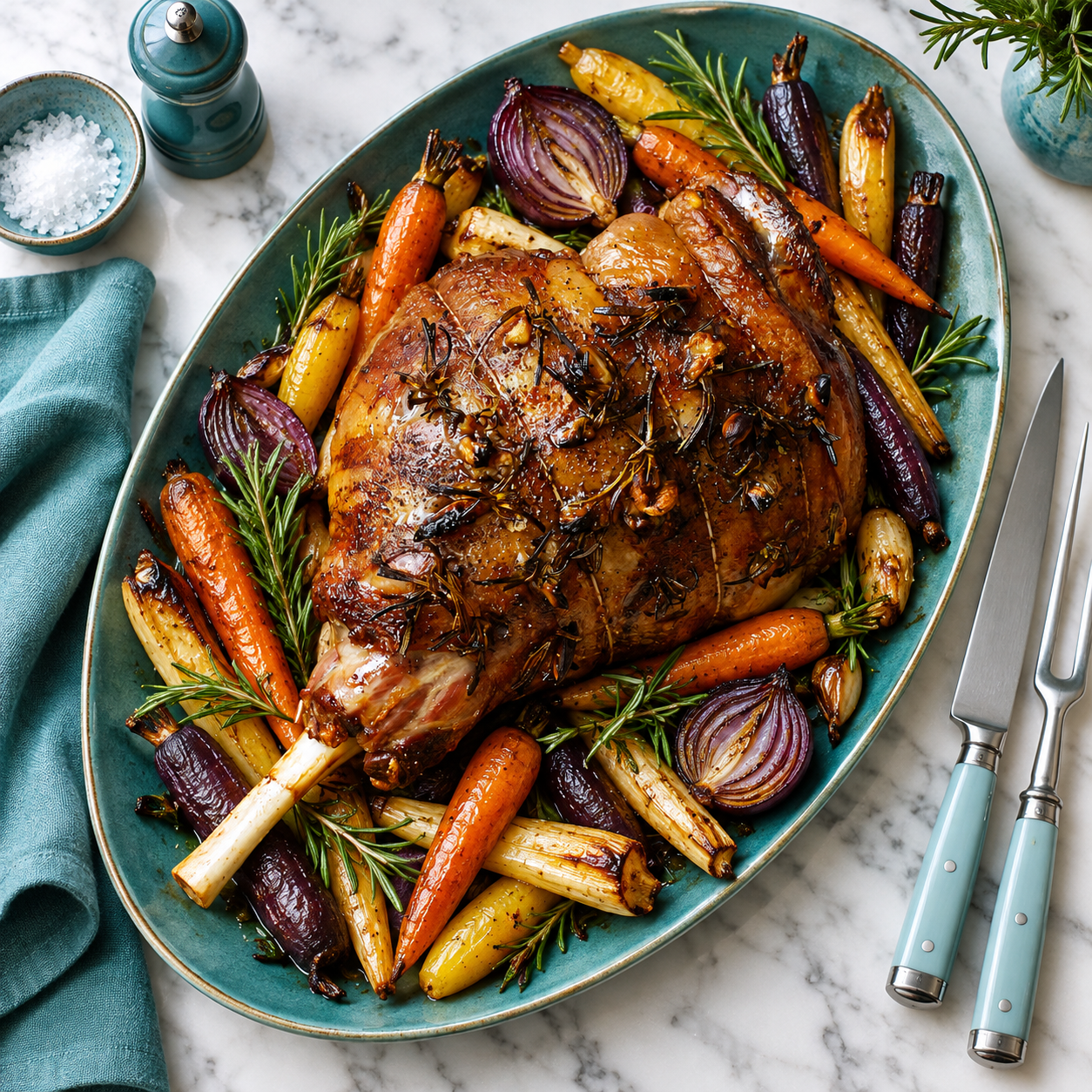
How to cook a whole leg of lamb with colourful roast vegetables
A whole leg of lamb brings a lovely sense of occasion to the table: a golden rosemary crust, generous slices and the promise of proper gravy. Our grass-fed UK lamb needs simple seasoning, careful cooking and a good rest to make a memorable Sunday lunch.
PREP 25 MINUTES • ROAST ACCORDING TO WEIGHT • REST 20–30 MINUTES
Allow approximately 4–6 servings from a 1.5–2kg bone-in leg, or 8–10 from a 2.5–3kg leg, with generous sides. Portions depend on appetite and the amount of bone and fat.
INGREDIENTS
For the lamb:
• 1 whole bone-in leg of lamb, 1.5–2kg or 2.5–3kg, fully thawed if frozen
• 2 tablespoons olive or rapeseed oil
• 4 garlic cloves, finely crushed
• 2 tablespoons finely chopped rosemary
• Zest of 1 lemon
• Salt and freshly ground black pepper
• 2 onions, thickly sliced, for the roasting tin
• 300ml water or lamb stock, plus extra as needed
For the vegetables, serving 4–6; double for a larger gathering:
• 500g mixed-colour carrots
• 500g parsnips
• 3 red onions, halved through the root
• 2 tablespoons oil
• 2 tablespoons honey, divided
• A few thyme sprigs
• Salt and pepper
1. PREPARE THE JOINT
Check the actual weight on the pack before planning your timings. Heat the oven to 190°C / 170°C fan / gas 5. Pat the lamb dry with kitchen paper; do not wash raw meat. Mix the oil, crushed garlic, rosemary, lemon zest and seasoning, then rub over the outside. Keeping the garlic on the surface avoids deep cuts into the meat.
Arrange the sliced onions in a roasting tin and sit the lamb on top. Pour the water or stock around, rather than over, the joint.
2. ROAST GENTLY, THEN UNCOVER
Cover loosely with foil and roast in the centre of the oven. As a planning guide, allow around 30 minutes per 500g for medium, or 40 minutes per 500g for a more thoroughly cooked finish. Remove the foil for the final 20 minutes so the surface can colour. Baste occasionally and add a splash of hot water if the tin starts to dry out.
Approximate total oven times, excluding resting:
• 1.5kg: 1 hour 30 minutes for medium; 2 hours for well done
• 2kg: 2 hours for medium; 2 hours 40 minutes for well done
• 2.5kg: 2 hours 30 minutes for medium; 3 hours 20 minutes for well done
• 3kg: 3 hours for medium; 4 hours for well done
These are starting points, not guarantees. Ovens, joint shape and starting temperature vary. Begin checking before the estimated finish and follow the pack instructions where they differ.
3. CHECK THE MEAT, NOT JUST THE CLOCK
Insert a clean food thermometer into the thickest meat, clear of the bone, and check more than one spot. For a thoroughly cooked result, reach 70°C for 2 minutes, or an equivalent safe combination such as 75°C for 30 seconds.
Whole, intact lamb cuts can be served pink inside when every outside surface has been thoroughly cooked. This does not apply to rolled or minced meat. If you are unsure how the joint has been prepared, or are serving someone more vulnerable to foodborne illness, use the thoroughly cooked approach. Colour alone cannot confirm the centre temperature.
4. MAKE THE COLOURFUL ROAST VEGETABLES
While the lamb cooks, scrub or peel the carrots and parsnips. Keep small carrots whole and split thick ones lengthways. Cut parsnips into chunky wedges, removing any woody cores. Leave a little root attached to each red-onion half to help it hold together.
Toss the vegetables with oil, thyme and seasoning on a separate tray, leaving space between the pieces. Roast for about 45–60 minutes, turning once, until tender and browned; larger pieces may need longer. Add the honey for the last 10–15 minutes, using half over the carrots and half over the parsnips. Watch closely so it glazes rather than burns. The vegetables can finish cooking while the lamb rests.
5. REST AND MAKE THE GRAVY
Lift the lamb onto a clean warm platter, cover loosely with foil and rest for 20–30 minutes. This makes carving easier and gives you time to finish everything else.
Skim excess fat from the roasting juices. Put the roasting tin over a gentle hob if it is suitable, or transfer the juices and onions to a saucepan. Add a little hot stock, scrape up the browned juices and simmer. Strain if you prefer smooth gravy. For a thicker finish, stir in a teaspoon of cornflour mixed with cold water and simmer until thickened. Taste before adding more salt.
6. CARVE AND BRING TO THE TABLE
Hold the joint securely with a carving fork. Cut a few slices from one side to create a stable base, then turn it onto that flat side. Carve across the grain into even slices, working around the bone. Spoon any resting juices into the gravy.
Scatter the glazed carrots, golden parsnips and roasted onion halves around the lamb. Add roast potatoes, seasonal greens and mint sauce for a generous Sunday spread.
MAKE THE MOST OF LEFTOVERS
Cool and refrigerate leftovers within two hours. Eat within 48 hours or freeze. Reheat only once, until steaming hot throughout; a little gravy helps keep sliced lamb moist.
ALLERGENS AND NUTRITION
Check your chosen stock, gravy ingredients and accompaniments for allergens, including celery, gluten or sulphites where present. The product listing's indicative nutrition describes plain raw lamb, not this finished recipe with oil, honey and sides.
The image is a cooked serving suggestion. The lamb is supplied raw; accompaniments are not included.
SHOP THE LAMB
Whole Grass-Fed UK Leg of Lamb
https://www.malpasfarmshop.co.uk/product-page/whole-grass-fed-uk-leg-of-lamb